
LB Finance
How can a space reflect a promise?
Experience Design
2019

About
LB Finance is a large non-bank financial institution based in Sri Lanka. As the company expanded, they recognized that their branch experience didn't reflect who they wanted to be, and approached Interbrand to reconsider what the brand meant to customers and how to better express it through the spaces where those customers showed up.
Working from a new brand purpose of "Opportunities Unlimited," I led the concept and design of a new retail experience intended to make that promise feel real.
Design Concept
The existing branches had a familiar problem: they looked and felt like a traditional bank. Steel security cages separated staff from customers, transactions were siloed into designated zones, and the overall atmosphere was functional at best. For a brand promising unlimited opportunity, the space was sending the wrong message: one of constraint rather than openness.
The first and most important move was removing the cages. In their place, an open counter with a ticketing system allowed all transactions to flow naturally, without customers feeling scrutinised or categorised by the type of business they were there to do. The space became lighter, more anonymous in the right sense: a place where anyone could walk in without immediately signalling their financial situation.
Aesthetically, the design drew from the tradition of Tropical Modernism - the architectural language of Sri Lanka most associated with Geoffrey Bawa. Simple, clean lines. Concrete paired with dark wood. Plants introduced throughout to bring warmth and a sense of the outdoors in. The goal was a space that felt distinctly Sri Lankan and quietly sophisticated, without any of the cold formality that financial institutions so often default to.
Facade during the Day

Reception
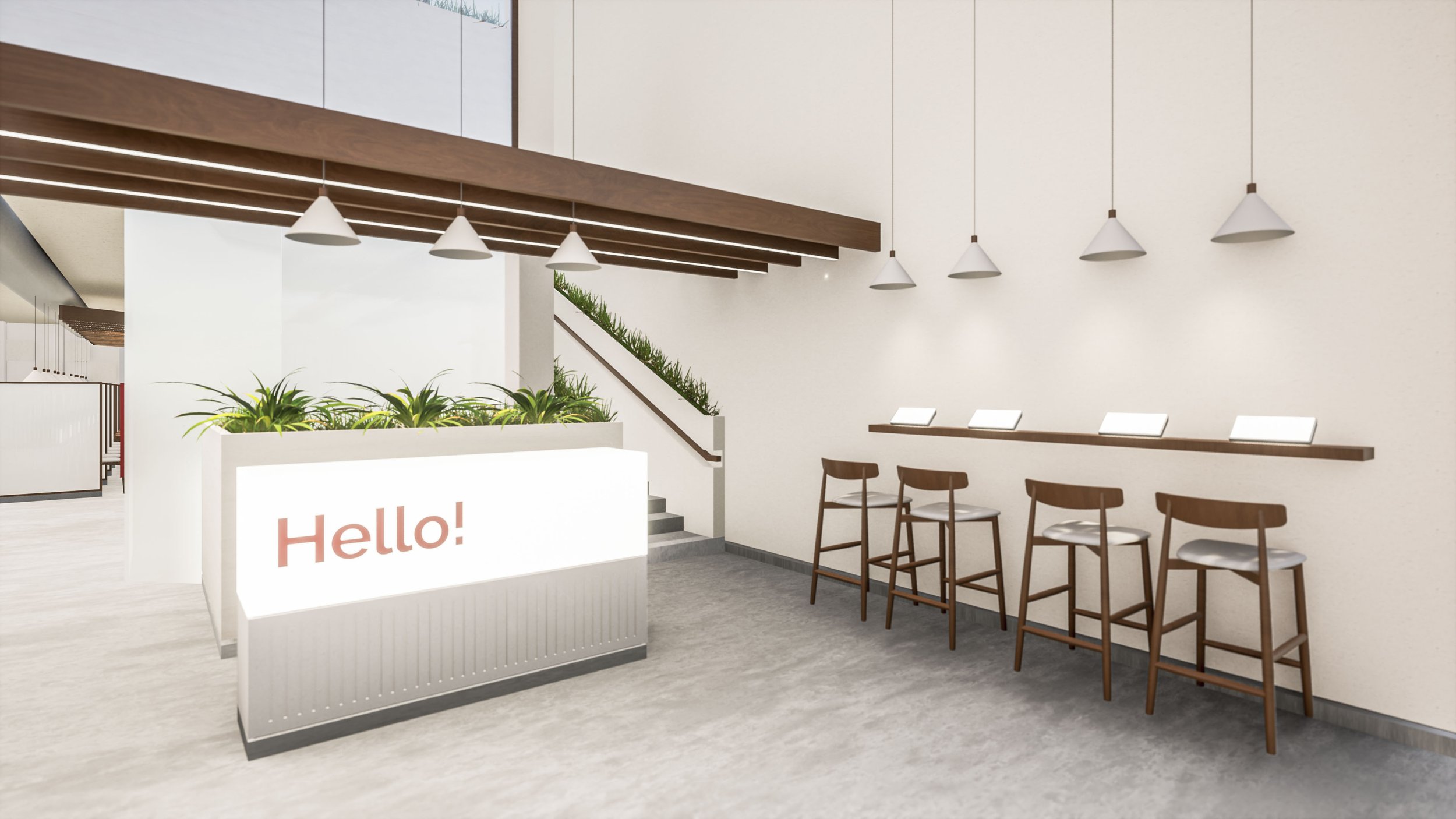
Self Service Counters

Service Counters
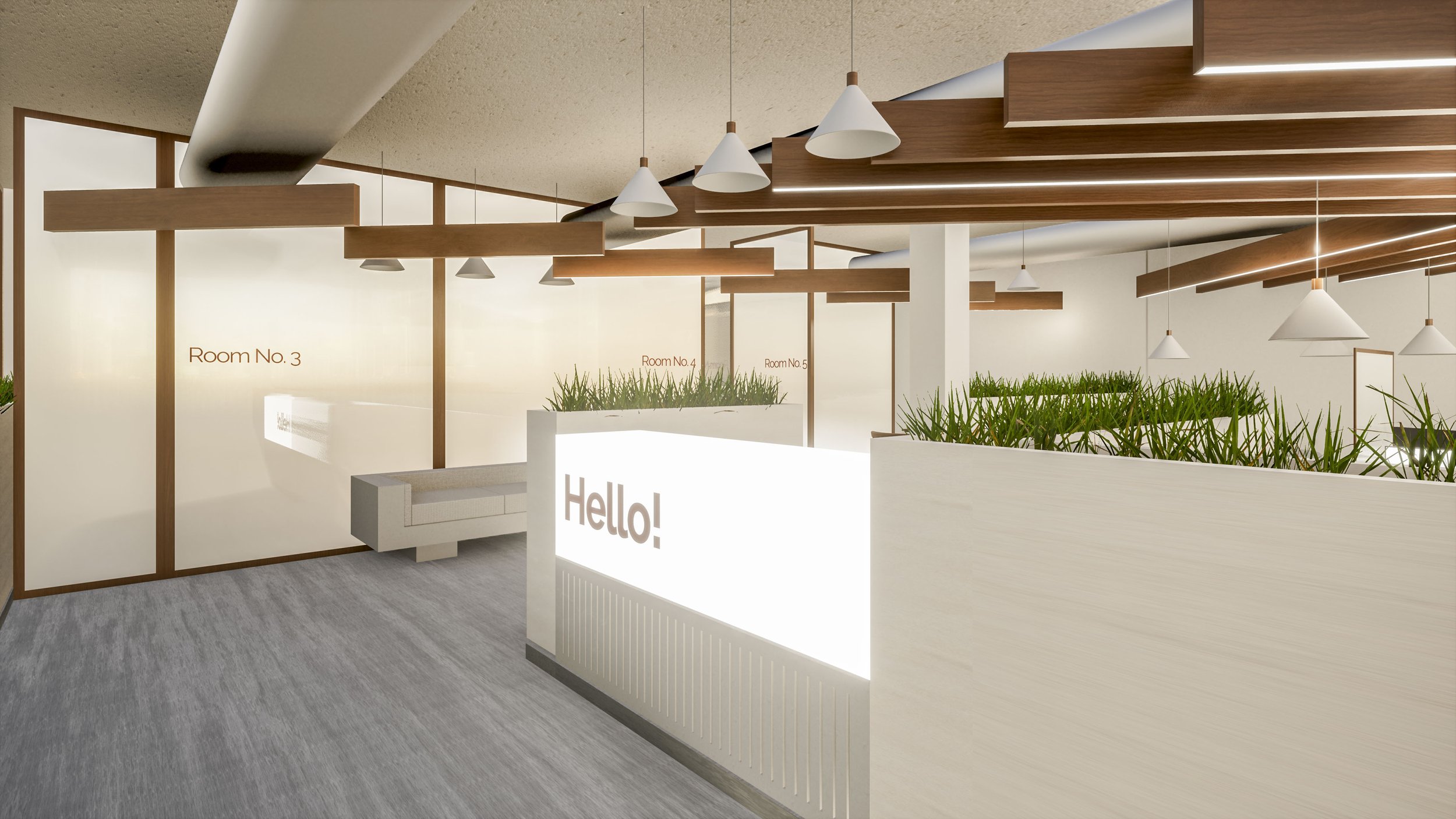
Second Floor Offices

Second Floor Reception

Sales Counters

Facade at Night
Outcome
The clients responded positively to the concepts. Implementation was handled by local contractors, and the final spaces reflected only a portion of the original design. The renders shown here represent the intended design.But the elements that were implemented were well received. Foot traffic to the branches nearly doubled, which the client attributed almost entirely to the new design.